
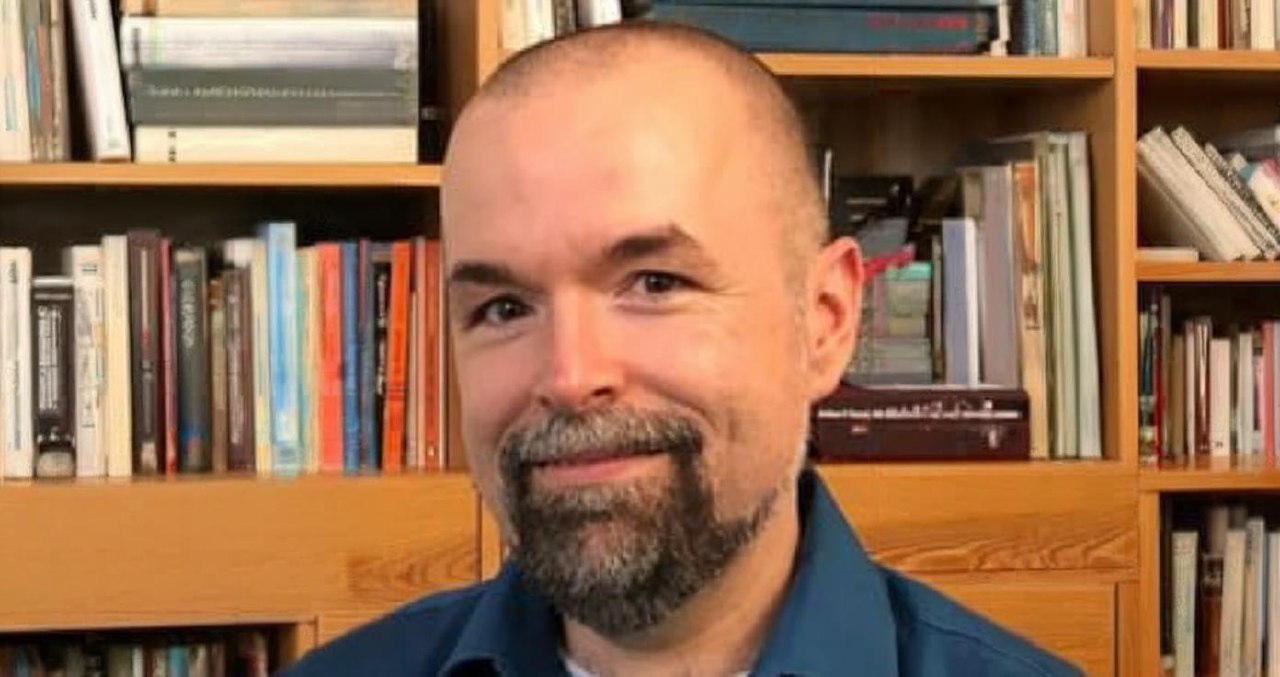
As a physician-scientist who has worked at the highest levels of academia, government, and industry, Dr. Josh Fessel brings a rare and timely perspective to conversations about ethics and transparency in biomedical research. Formerly a senior leader at the National Institutes of Health, Dr. Fessel drew national attention after publishing a widely shared essay explaining his decision to resign from his government role—an unusually candid reflection on leadership, accountability, and trust in science. Few researchers have both navigated the systems that govern biomedical research and publicly wrestled with their ethical limits. Over the course of his career, Dr. Fessel has moved between laboratory science, public service, and private industry, confronting firsthand how discoveries transition from controlled research environments into the lives of real people—and the moral responsibilities that follow.
“Science and medicine are both team sports, in my opinion,” Dr. Fessel says. “The goal was to help all of the people in the area of research that I’d be responsible for succeed, and that really lit me up.”
That collaborative mindset guided his work running a basic and early translational research lab, his leadership roles at the National Institutes of Health, and his role in the private sector. Across those settings, Dr. Fessel has consistently focused on the ethical responsibilities that come with discovery—especially as research begins to involve people directly.
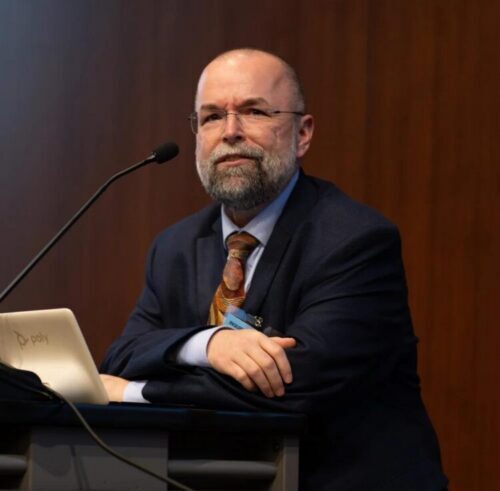
“Once you start talking about human participants and human partners in your research, you need to be able to tell them what the likely risks are, what the possible risks are,” he explains. “That’s a key part of informed consent.”
Those same ethical principles shape Fessel’s perspective on animal research, one of the most debated and often misunderstood components of biomedical science. “I am a supporter of appropriate use of animal research in understanding, asking, and answering scientific questions and in understanding how we can best help people,” he says.
While Dr. Fessel is optimistic about scientific progress, he is clear-eyed about current limitations. “I would love for there to come a time when we don’t need to do animal research,” he says. “Do I believe we can get there? I do. Do I believe we should try to get there? I do. But we’re not there. Today is not that day.”
From his perspective, animal research plays a critical role in ensuring both safety and scientific rigor before studies ever reach humans. “What would have to be true for me to enroll in a first-in-human study of a new drug that was developed without any animal research at all?” Dr. Fessel asks. “And I don’t yet have the answer to that for myself.”
He emphasizes that ethical responsibility requires honesty about uncertainty. “I don’t think I could ethically discuss the range of potential risks with zero animal data at this point,” he says. “If I too strongly stated what the safety profile and the risk profile was, I would be lying.”
Dr. Fessel emphasizes that scientific rigor requires understanding how results translate across biological systems. “If a result appears in cells in a dish but behaves differently in mice, the rigorous conclusion is that it only applies to cells in a dish,” he explains.
Importantly, Dr. Fessel stresses that animal research is never undertaken casually. “Researchers are always thinking about, do I need to do this in an animal model at all?” he says. “If the answer is yes, how do I minimize the involvement? How do I get exactly the information I need, and no more?”
He also challenges public misconceptions about animal care. “I have never walked into an animal research facility and thought, ‘Oh my God, these are deplorable conditions,’” Dr. Fessel says enthusiastically. “Quite the opposite. These animals are incredibly well cared for. There is real respect for the lives of these animal subjects.”
Still, Dr. Fessel believes scientists must do more to engage openly with the public. “For a lot of people, seeing is believing,” he explains. “I think it could be really impactful if we normalized bringing people into our research context—into our labs, into our vivaria—so they can see how animal subjects are treated.”
As biomedical research grows more complex, Dr. Fessel believes ethical responsibility must grow with it. “Tell the truth about what you know,” he says. “Tell the truth about what you don’t know.”
For Dr. Fessel, transparency is essential to rebuilding trust. “Trust is not a building,” he says. “It’s an activity. It’s not a thing you did, it’s a thing you’re doing.”
- Written by Clara Chakarian http://clarachakarian@gmail.com