
The Massachusetts’ life sciences community, including MSMR, gathered at the University of Massachusetts on December 5, 2025 for a rare dialogue with Congressmen Jake Auchincloss and Richard Neal with National Institutes of Health (NIH) Director Dr. Jay Bhattacharya, highlighting both the achievements and challenges at the intersection of science, policy, and public trust.
Rep. Auchincloss opened by celebrating the Commonwealth’s unrivaled concentration of research hospitals, biotech firms, and academic centers. “Massachusetts is a national treasure,” he said, citing that the state receives nearly $4 billion annually in NIH funding—second only to California.”
Acknowledging the economic ripple effects of federal investment, Rep. Neal noted that every NIH dollar generates more than $2.50 in state economic activity. He reaffirmed that protecting these research dollars means safeguarding both local jobs and global medical progress.
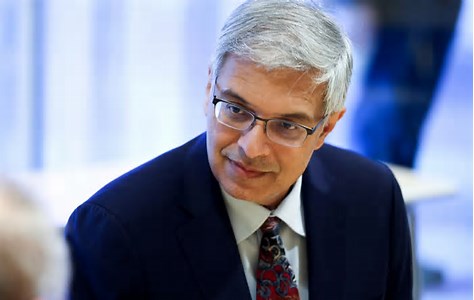
Among his proposals, Bhattacharya emphasized reducing the cost barriers to cutting-edge treatments—such as the multibillion-dollar sickle cell gene therapy—by investing in production science, clinical translation, and equitable access. He also announced plans to expand support for replication studies, not as punishment for scientists, but as a means to strengthen reliability and rigor in research.
For the next generation of scientists, Bhattacharya committed to reforming NIH’s grant systems to better support early-career investigators and encourage bold, high-risk ideas. “If we want another generation of Nobel-level innovators, we have to take chances on them earlier,” he said.
The meeting drew sharp questions from Massachusetts research leaders, who expressed concerns about the impact of forward funding models and declining grant success rates on morale and continuity of research. Dr. Bhattacharya acknowledged these challenges, promising a pragmatic approach to funding that safeguards both scientific progress and fiscal responsibility.
Despite tensions, the event closed on a tone of unity and shared purpose. Both Neal and Bhattacharya agreed that America’s scientific leadership—and its economic health—depend on doubling down, not scaling back, its investment in discovery. Let’s see if our reality continues to support this resolve. Please read more here.
- Pénzes JJ, Holm M, Yost SA, Kaelber JT. Cryo-EM-based discovery of a pathogenic parvovirus causing epidemic mortality by black wasting disease in farmed beetles. Cell. 2024;187(20):5604-5619.e14. doi:10.1016/j.cell.2024.07.053 https://pubmed.ncbi.nlm.nih.gov/39208798/
- Parvoviruses. https://www.ncbi.nlm.nih.gov/books/NBK7715/
- Viruses. https://www.genome.gov/genetics-glossary/Virus
- Global Insect Farming Market. https://market.us/report/insect-farming-market/
- Kaelber Laboratory. https://molbiosci.rutgers.edu/faculty-research/faculty/faculty-detail/84-k-l/1093-kaelber-jason
- “Getting Started in cryo-EM” by Prof. Grant Jensen https://www.youtube.com/watch?v=q17nGZPCeoA
- Rutgers CryoEM & Nanoimaging Facility. https://iqb.rutgers.edu/RCNF